
Steel Building Services in Twin Falls County, ID
Local Steel Framework Contractor Expertise
Across Twin Falls County, Idaho, builders and property owners trust a steel framework contractor to erect durable structural systems that handle snow loads, wind, and seismic conditions. This page covers steel building erection and framework services tailored to the Magic Valley region—from agricultural operations near Kimberly to growing residential subdivisions like Morning Sun and commercial projects downtown.
Whether you're constructing a manufacturing facility, a farm storage facility, or a multi-story commercial frame, reliable steel framework erection keeps your project on track and structures standing strong for decades.
How Steel Framework Gets Built
From foundation inspection to final bolt-up, each phase ensures precise alignment and structural integrity.
Site & Foundation Prep
Verify lot grades, frost depth compliance (24' below finished grade in Twin Falls County), and concrete pad readiness before column placement.
Steel Delivery & Layout
Receive pre-engineered columns, beams, and trusses. Confirm all members against plans and organize staging to optimize crane access and workflow.
Column & Beam Erection
Crane-set columns onto anchor bolts with precision levels. Install bracing and temporary guy cables to stabilize the frame during bolt-up.
Connection & Bolting
Hand-torque high-strength bolts per design specs. Inspect and verify all connections for plumb, level, and gap compliance before roof installation.
Roof Truss & Panel Install
Set trusses and roof purlins to handle Twin Falls County snow loads (30 lbs/sq ft). Secure wall and roof panels to create a weather-tight envelope.
Final Inspection & Sign-Off
Walk the frame with building inspector and engineer to confirm compliance with international building codes and County permits.
You'll always know what's happening next—and when each phase closes out.
Steel Services for Twin Falls County Projects
Each service tackles a specific building need across residential, agricultural, and commercial sectors in the region.
Steel Building Erection
Complete assembly of pre-engineered steel frames—columns, beams, braces—on footings prepared to Twin Falls County frost depth requirements. Ideal for agricultural barns, commercial warehouses, and industrial facilities requiring clear-span flexibility without interior columns.
Use case: McMillan and Sunterra area contractors routinely use steel erection to expand inventory or production space fast and affordably.
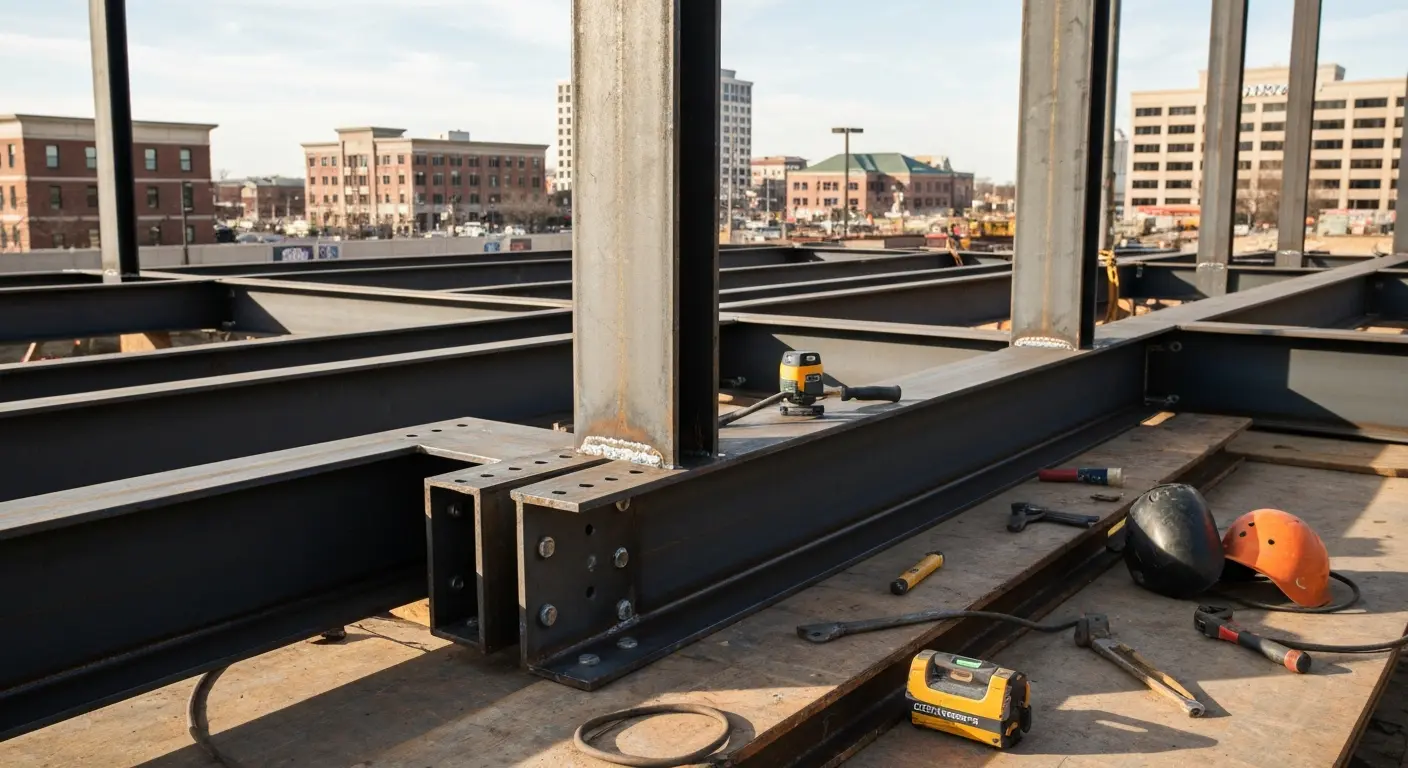
Steel column and beam assembly in progress near commercial district
Steel Building Foundation Installation
Concrete pad and anchor bolt placement engineered to local conditions. Verifies soil bearing capacity (1,500 lbs/sq ft max unless soils report provided), frost depth (24'), and grading to ensure long-term frame stability under snow and wind loads.
Ensures compliance with Twin Falls County International Building Code adoption and seismic design category C standards.
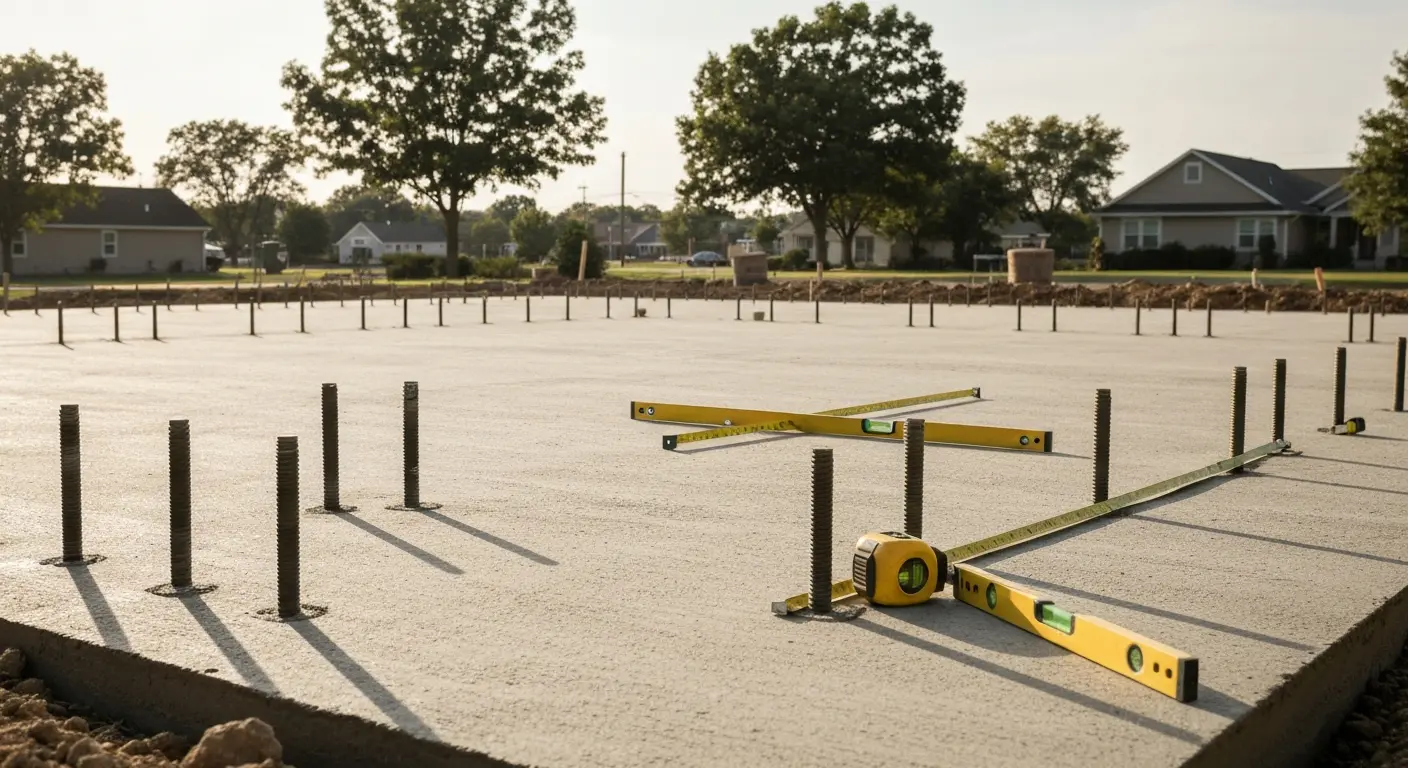
Anchor bolt layout on concrete pad, ready for column placement
Steel Frame Assembly
Bolted connection assembly and welding of secondary members (girts, bracing, splice plates). Includes temporary bracing removal once all primary connections are verified and hand-torqued to engineer specifications.
Works in concert with truss design and installation requirements mandated by Twin Falls County building inspectors.
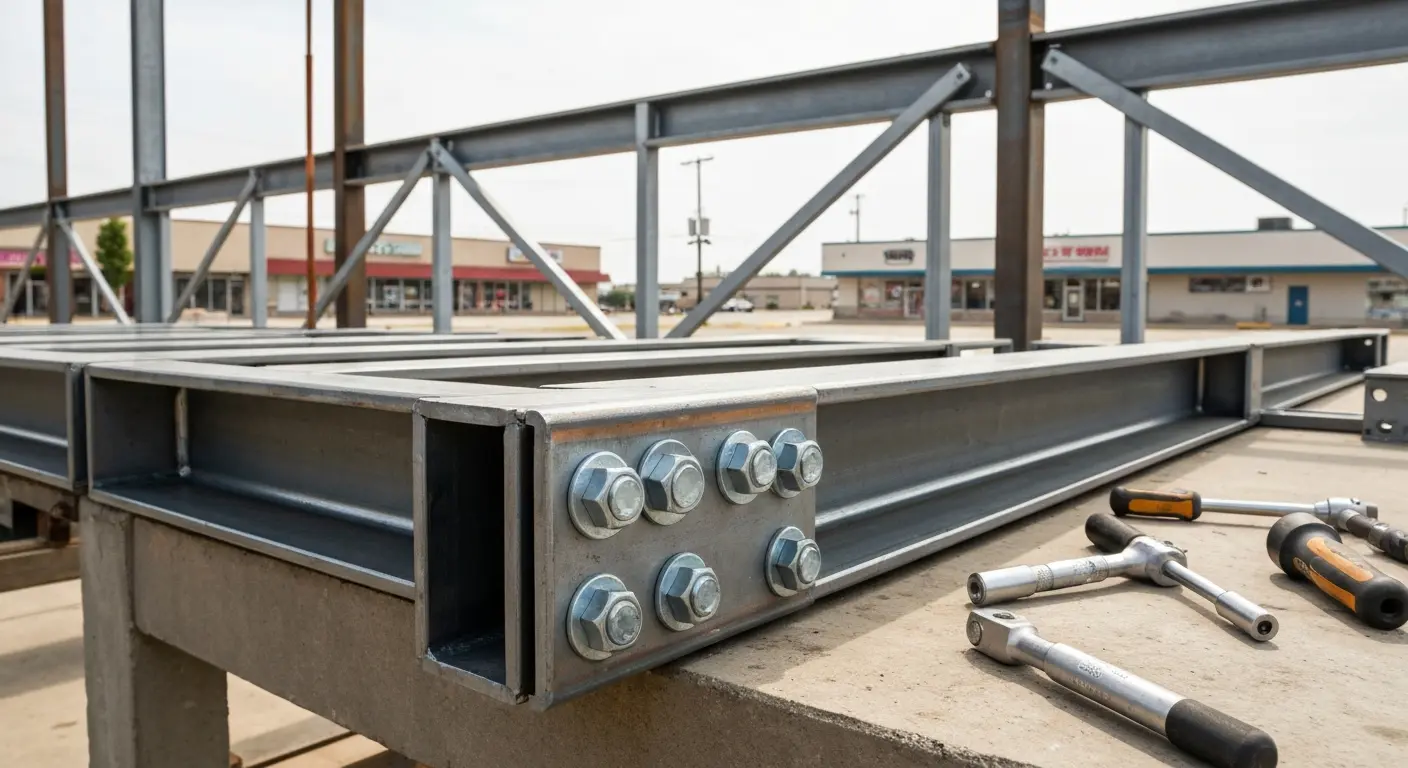
Frame connections during assembly near Grandview Drive commercial corridor
Structural Steel Installation
Full-service placement of multi-story frames, lattice towers, and specialty structures. Includes load-path verification, shear wall installation, and connections designed to handle Twin Falls County 115 mph wind design (Residential Code) and seismic design category C forces.
Critical for downtown Twin Falls renovations and high-wind canyon-rim sites near Snake River viewsheds.
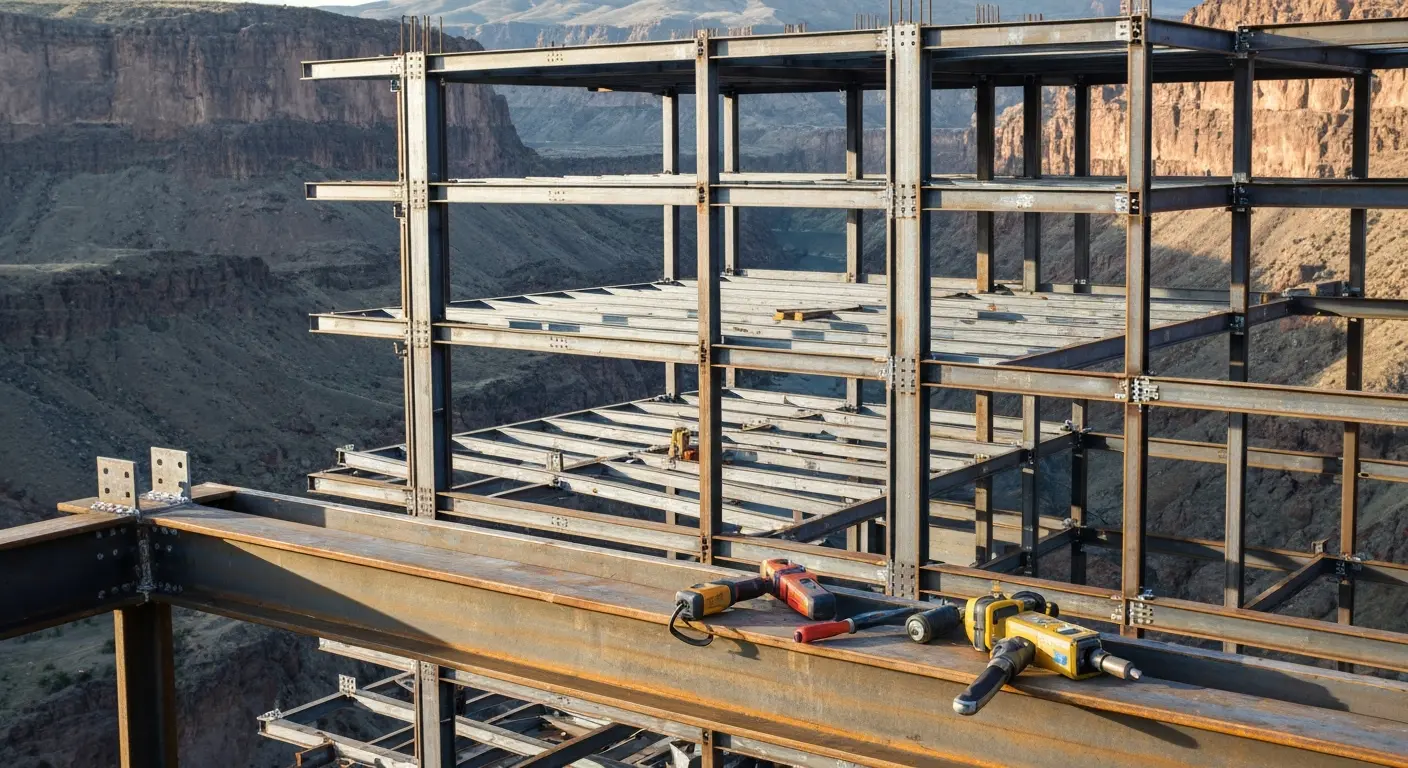
High-rise frame assembly overlooking Snake River Canyon
Why Steel Framework Matters in Twin Falls County
Steel performs where wood and concrete alone often struggle in this region's climate and geography.
Handles Snow & Wind Load
Twin Falls County mandates 30 lbs/sq ft snow load and 115 mph (Residential Code) wind design. Steel beams and trusses carry these loads without sag or deflection over decades.
Faster Construction
Pre-engineered members arrive ready to bolt. No on-site fabrication delays. Agricultural and commercial operators near Kimberly and Jerome save weeks compared to wood-frame erection.
Clear-Span Interior
No interior support columns. Storage, manufacturing, and livestock operations maximize usable floor space without obstacles.
Seismic & Fire Resistant
Steel meets seismic design category C standards and doesn't ignite or spread fire, critical given Idaho's wildfire history and Twin Falls County proximity to canyon microclimates.
Low Maintenance
Protective coatings resist rust and weathering. No pest damage or rot. Farmers and commercial owners in Morning Sun, Sunterra, and downtown keep structures looking new for 50+ years.
Expandable & Adaptable
Bolt on additions, move walls, add mezzanines. Steel frames accommodate changing operations without structural compromise.
Local Insight: Twin Falls County received significant food-processing and agricultural growth with Chobani's large manufacturing footprint. Many facilities rely on steel-frame warehouses and production buildings to meet health code and rapid-scaling demands.
Serving Twin Falls County Neighborhoods & Areas
Steel framework services reach residential subdivisions, commercial districts, and rural farmland across the region.
Downtown & Canyon Rim
Multi-story mixed-use and commercial frames near Main Avenue and Centennial Park. Wind loads amplified by canyon exposure require precision engineering and experienced crews.
Morning Sun & East Side
Active residential subdivision with accessory structures, small commercial pads, and warehouse projects. Growing neighborhood supports light industrial and trade service buildouts.
McMillan & Blue Lakes
Mid-size commercial district and office parks. Many retail and professional buildings incorporate steel frames for rapid lease-ready spaces and expansion potential.
Sunterra & West Side
Newer residential with emerging commercial spine. Steel-frame shops, storage facilities, and automotive facilities serve the expanding west-side population.
Kimberly & Jerome Area
Agricultural heartland with potato storage, dairy operations, and food-processing plants. Steel frames handle heavy equipment and cold-chain infrastructure.
Grandview Drive Corridor
Emerging northwest mixed-use district near College of Southern Idaho and hospital. Industrial and office parks rely on steel-frame efficiency and code compliance.
What Sets Reliable Steel Framework Contractors Apart
Engineering & Compliance
Experience with Twin Falls County International Building Code adoption, seismic category C, frost depth (24'), snow load (30 lbs/sq ft), and wind design (115 mph residential). Stamped plans from licensed Idaho engineers. Inspections at each phase.
Precision Installation
Equipment operators who understand crane safety, load calculations, and temporary bracing removal protocols. Laser leveling and torque-wrenches ensure plumb, level, and hand-tight connections per specification.
Communication & Transparency
Clear scope, no surprises. Direct coordination with general contractors, architects, and building inspectors. Daily progress updates. Transparent change orders if site conditions shift.
Proven Track Record
20+ years in the region, 500+ projects completed, zero-incident safety record. References from food processors, manufacturers, farmers, and commercial property owners across Twin Falls and Jerome Counties.
When you hire a steel framework contractor, you're hiring a partner who understands your building, your deadlines, and your budget.
Frequently Asked Questions
What's the process for steel framework erection in Twin Falls County?
Site prep and foundation inspection verify frost depth (24'), anchor bolt placement, and soil bearing capacity. Steel members arrive pre-engineered, are staged on-site, then erected via crane in a coordinated sequence: columns, temporary bracing, beams, connections, truss/roof, and final inspection.
Do I need an engineer for my steel building project in Twin Falls County?
Yes. All structural steel in Twin Falls County must comply with International Building Code adoption and require stamped plans from a licensed Idaho engineer. Pre-engineered building providers include engineered plans; custom designs require project-specific engineering.
How does the Twin Falls County frost depth affect my foundation design?
Twin Falls County requires anchor bolts and footings to extend 24' below finished grade to prevent frost heave. This ensures columns remain plumb and level year-round as soil freezes and thaws.
What are Twin Falls County snow and wind design standards for steel buildings?
30 lbs/sq ft ground snow load and 115 mph, 3-second gust wind design for Residential Code; 105 mph for risk category II commercial buildings. Seismic design category is C. All steel members must be engineered to these loads.
Can I expand a steel building later?
Yes. Steel frames allow you to bolt additions, extend walls, or add second stories. Original design must account for future expansion to avoid re-engineering existing connections.
What inspections are required during erection?
Twin Falls County Building Department inspects foundations, connection bolting, and final frame stability. Inspections occur after foundation cure, during member placement, after all connections are torqued, and before roof/wall installation begins.
DISCOVER WHAT OUR CUSTOMERS HAVE TO SAY ABOUT US
REVIEWS
proudly serving these areas
Ada County, ID
Bannock County, ID
Blaine County, ID
Cassia County, ID
Jerome County, ID
Lincoln County, ID
Twin Falls, ID
Minidoka County, ID
READY TO take the next step?
get a free quote TODAY!
QUICK LINKS
our services
service areas
operating HOURS
Mon: 9:00 am - 5:00 pm
Tue: 9:00 am - 5:00 pm
Wed: 9:00 am - 5:00 pm
Thu: 9:00 am - 5:00 pm
Fri: 9:00 am - 5:00 pm
Sat: Closed - Closed
Sun: Closed - Closed